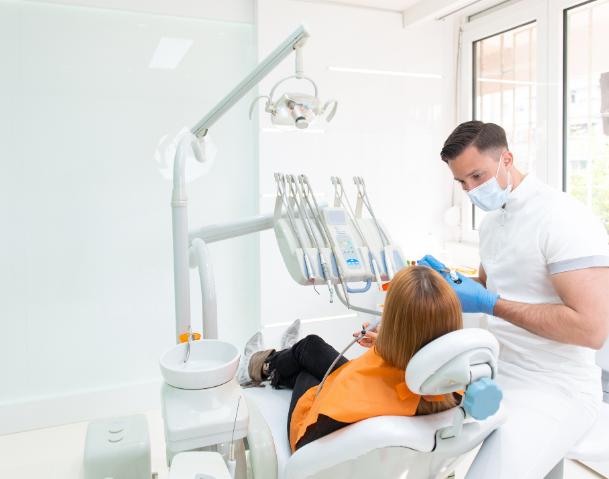
Dentists often see patients more regularly than a GP does, which puts them in a strong position to notice early signs of sleep-disordered breathing well before a formal diagnosis is made. The challenge is turning that observation into something structured, rather than relying on a hunch. Validated screening tools give dentists a practical way to do this in the time available during a routine appointment.
The British Academy of Dental Sleep Medicine (BADSM) trains dentists to use screening tools such as the stop-bang questionnaire and the Epworth Sleepiness Scale alongside clinical signs like jaw and TMJ symptoms, building a simple but effective sleep apnea risk assessment tool into everyday practice.
What Is the STOP-BANG Questionnaire?
The stop-bang questionnaire is a short, validated screening tool made up of eight yes-or-no questions, each corresponding to a letter in its name: Snoring, Tiredness, Observed apnoea, blood Pressure, BMI, Age, Neck circumference, and Gender. It takes only a couple of minutes to complete and does not require any equipment, which makes it well suited to a dental setting where chair time is limited.
A higher number of positive answers on the stop-bang questionnaire indicates a greater likelihood of obstructive sleep apnoea, and the tool is intended to flag risk rather than provide a diagnosis. Patients who score in a higher-risk range are appropriate candidates for referral to a GP or sleep service for further assessment. This is not just a theoretical extension of a hospital-based tool: a validation study of 1,000 dental patients screened directly in dental clinics found the stop-bang questionnaire to be a strong predictor of confirmed OSA on follow-up testing, describing dentists as effective “epidemiological sentinels” for the condition.

Using the Stop Bang Questionnaire UK Dental Practices Can Rely On
For a stop bang questionnaire uk dental teams can apply consistently, the key is treating it as a standard part of the new patient or periodic review process rather than something used only when a patient happens to mention snoring or fatigue. Building the questionnaire into routine intake paperwork or a quick verbal run-through means at-risk patients are identified even when they would not have raised the issue themselves.
It is worth being clear with patients that a positive screen is not a diagnosis. The dentist’s role is to identify risk and refer appropriately, not to diagnose or manage sleep apnoea outside of that referral pathway.
What Is the Epworth Sleepiness Scale?
The Epworth Sleepiness Scale is a separate, patient-completed questionnaire that measures how likely someone is to doze off during eight everyday situations, such as sitting and reading or being a passenger in a car for an hour. Rather than looking at breathing events directly, it captures the daytime impact of poor sleep quality, which makes it a useful companion to the stop-bang questionnaire.
Because it relies entirely on the patient’s own perception of sleepiness, it works best alongside other screening information rather than as a standalone measure, since some patients underestimate how sleepy they really are.
Epworth Sleepiness Scale Interpretation and Scoring
Epworth sleepiness scale interpretation should always be considered alongside the patient’s stop-bang result rather than in isolation. A patient reporting high daytime sleepiness alongside several stop-bang risk factors presents a more consistent picture than a high score on either tool alone.
For dentists newer to using the questionnaire, epworth sleepiness scale score interpretation is easier to apply once a few completed forms have been reviewed alongside a patient’s clinical presentation, including snoring history and observed jaw or airway signs. Getting comfortable with epworth sleepiness scale scoring interpretation over time helps the whole team recognise which combinations of answers are worth flagging for referral rather than treating every response in isolation.
Combining Tools Into a Practical Sleep Apnea Risk Assessment Tool
Used together, the stop-bang questionnaire and Epworth Sleepiness Scale form a straightforward sleep apnea risk assessment tool that fits within normal appointment time. Neither tool replaces a proper sleep study, but combining a validated screening questionnaire with everyday clinical observation gives dentists a defensible basis for deciding which patients to refer on.
This layered approach, screening plus clinical judgement, is a more reliable sleep apnea risk assessment tool than relying on any single question or symptom in isolation.
Why TMJ Symptoms Deserve a Place in Sleep Apnoea Screening
Patients describing tmj pain worse at night are a familiar presentation in general dental practice, and it is worth pausing on this symptom rather than treating it purely as a joint problem. Nocturnal bruxism is common in patients with sleep-disordered breathing, and jaw clenching or grinding during sleep can be the body’s response to an airway that is repeatedly narrowing or collapsing, a link supported by polysomnographic research tying the intensity of sleep bruxism to the occurrence of TMD-related pain.
Similarly, tmj ear pain at night can be linked to muscular tension around the joint that intensifies during sleep, and in some patients this overlaps with the same nocturnal muscle activity associated with sleep apnoea. Neither symptom automatically means a patient has sleep apnoea, but both are a reasonable prompt to run a stop-bang questionnaire rather than treating the jaw symptom in isolation.
How to Relieve TMJ Pain at Night While Addressing the Underlying Cause
Patients asking how to relieve tmj pain at night are usually looking for practical relief, such as a night guard, jaw stretches, or reducing evening caffeine and alcohol intake. These measures can genuinely help, but where sleep-disordered breathing screening has flagged additional risk, symptomatic relief alone is unlikely to resolve the underlying driver of the muscle activity.
Addressing both, protecting the joint while also screening for and, where appropriate, referring for sleep apnoea assessment, gives patients a more complete route to lasting improvement rather than repeated short-term symptom management.

Building Screening Into Routine Dental Appointments
None of this requires specialist equipment or a significant change to appointment structure. A brief stop-bang questionnaire, an Epworth Sleepiness Scale where daytime sleepiness is mentioned, and attention to jaw symptoms during routine examination are enough to catch a meaningful proportion of at-risk patients who would otherwise go unscreened. BADSM’s courses cover how to build this kind of screening into everyday workflow without disrupting normal practice.
Frequently Asked Questions
What is the stop-bang questionnaire?
The stop-bang questionnaire is an eight-question validated screening tool that assesses a patient’s risk of obstructive sleep apnoea based on snoring, tiredness, observed apnoea, blood pressure, BMI, age, neck circumference, and gender.
What is the Epworth Sleepiness Scale?
The Epworth Sleepiness Scale is a patient-reported questionnaire measuring the likelihood of dozing off during everyday situations, used to assess the daytime impact of poor sleep quality.
How should dentists interpret Epworth Sleepiness Scale scores?
Epworth sleepiness scale interpretation is most useful when considered alongside stop-bang results and clinical findings, rather than as a standalone score used to make referral decisions on its own.
Can TMJ pain be linked to sleep apnoea?
Tmj pain worse at night and tmj ear pain at night can be linked to nocturnal bruxism, which sometimes occurs alongside sleep-disordered breathing. These symptoms are a reasonable prompt for further screening rather than a diagnosis on their own.
Is a positive stop-bang result a diagnosis of sleep apnoea?
No. A positive result on the stop-bang questionnaire indicates increased risk and supports a referral for further assessment. It is not a diagnosis of obstructive sleep apnoea.
Want to build validated sleep apnoea screening into your own practice? Join BADSM as a member and get practical training in chairside risk assessment.*
Dr. Aditi Desai is the President and Founder of the British Academy of Dental Sleep Medicine, with over 20 years of experience in oral appliance therapy and a co-author of the Standards of Care for Mandibular Advancement Devices.*

