
There is a growing body of evidence, and now formal national guidance, recognising that dental professionals have a meaningful clinical role in the management of obstructive sleep apnoea. For patients, this raises questions. For dentists without training in sleep medicine, it can raise even more. What, precisely, can a dentist for sleep apnoea actually do? And how does dental involvement fit into a healthcare system where sleep apnoea has traditionally been managed by sleep physicians and respiratory clinicians?
The British Academy of Dental Sleep Medicine (BADSM) trains dental professionals to answer these questions in clinical practice. This article addresses the most common questions about the dentist sleep apnoea role, what a trained dentist for sleep apnoea can offer patients, and what training makes that clinical contribution possible.
What Is the Role of a Dentist in Sleep Apnoea Management?
The dental profession’s role in sleep apnoea management arises from anatomy. The structures that determine whether the upper airway remains open during sleep, including the lower jaw, tongue, palate, tonsils, and oropharyngeal tissues, are the same structures a dentist examines at every appointment. This anatomical access makes the dental chair a clinically relevant setting for both identifying patients at risk and providing evidence-based treatment.
Nationally, this role is formally recognised. NICE guidance on the management of obstructive sleep apnoea includes oral appliance therapy as a recommended treatment option, which means that a trained sleep apnoea dentist is operating within formally acknowledged clinical guidelines, not outside them.
The introduction to dental sleep medicine on the BADSM site provides a useful overview of how these guidelines position the dental profession within the broader sleep care framework.
How Can a Dentist Help with Sleep Apnoea?
Several distinct clinical functions define how dental professionals contribute to sleep apnoea care. An OSA dentist may contribute to patient management in any or all of the following ways.
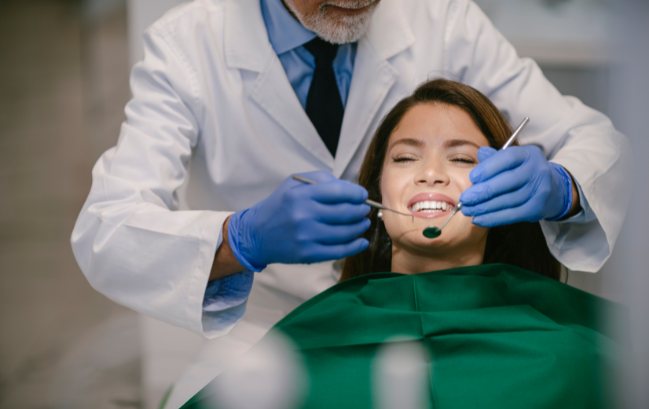
Screening and Recognising Risk
Before treatment, there is recognition. A dentist for sleep apnoea uses structured clinical assessment to identify patients who may have undiagnosed sleep-disordered breathing. This involves:
- Administering validated screening questionnaires such as the STOP-Bang or the Epworth Sleepiness Scale
- Assessing intraoral features including tongue posture, palate morphology, and Mallampati score
- Observing craniofacial anatomy associated with airway compromise, including retrognathia and tonsillar hypertrophy
- Taking a focused history covering snoring, witnessed apnoeas, morning symptoms, and sleep quality
Because dental patients are seen regularly, the dental practice offers an accessible point of clinical contact for patients who may not have raised their sleep concerns with any other healthcare provider.
Oral Appliance Therapy
The primary treatment function of a sleep apnoea dentist is the provision of oral appliance therapy, specifically mandibular advancement devices (MADs). A MAD repositions the lower jaw during sleep, increasing the posterior airway space and reducing the likelihood of obstruction.
MADs are indicated for mild to moderate obstructive sleep apnoea and are recommended for patients who prefer them to CPAP. Research, including long-term outcome data from the ORCADES study, supports the clinical effectiveness of MADs in sustained OSA management. A dentist sleep apnoea specialist trained to select, fit, and titrate these devices is providing treatment that is both evidence-based and recommended by major clinical guidelines.
Managing CPAP-Intolerant Patients
A substantial proportion of patients prescribed CPAP either do not achieve adequate adherence or discontinue treatment entirely. For these patients, the question of how can a dentist help with sleep apnoea becomes particularly pressing. A trained dentist for sleep apnoea can offer MAD therapy as an evidence-based alternative, closing a gap in the care pathway that would otherwise leave patients without effective treatment.
Multidisciplinary Collaboration
An OSA dentist does not work in isolation. Dental sleep medicine is inherently a multidisciplinary speciality. A trained sleep apnoea dentist communicates with sleep physicians, GPs, ENT surgeons, and respiratory physiologists, referring patients for overnight sleep studies, receiving diagnostic reports, and integrating dental treatment within a shared care plan. This collaboration is central to how dentists contribute to sleep apnoea management without stepping into areas that require specialist medical input.
When Should a Patient See a Dentist for Sleep Apnoea?
A patient should consider seeing a dentist for sleep apnoea in any of the following circumstances:
- They snore regularly and have not had a formal OSA assessment
- They have been diagnosed with mild to moderate OSA and are considering treatment options
- They have tried CPAP but find it intolerable or are struggling with adherence
- They have been referred by a sleep physician for oral appliance therapy
- They have clinical features during a dental examination that suggest elevated OSA risk
For many patients, the dental practice is not a secondary option in these situations: it is the first clinical setting where their sleep concern is taken seriously and assessed with appropriate clinical tools.
What Training Does a Dentist Need?
The clinical functions described above require specific training that is not part of standard dental education. A sleep apnoea dentist needs to understand the anatomy and physiology of sleep-disordered breathing, the evidence base for oral appliance therapy, how to select and manage MADs, and how to integrate dental treatment within a multidisciplinary clinical pathway.
BADSM’s Essentials of Dental Sleep Medicine course provides this clinical foundation. It is designed for practising dentists who want to build a credible role in dental sleep medicine, from initial patient assessment through to long-term management. BADSM membership provides ongoing access to CPD, clinical updates, and a professional community of trained dental sleep medicine practitioners.
Ready to develop your clinical role in dental sleep medicine? Explore BADSM’s training courses for dentists or join BADSM as a member and build the expertise to treat sleep apnoea patients with confidence.
Dr. Aditi Desai is the President and Founder of the British Academy of Dental Sleep Medicine, with over 20 years of experience in oral appliance therapy and a co-author of the Standards of Care for Mandibular Advancement Devices.
Frequently Asked Questions
What can a dentist do for sleep apnoea?
A dentist for sleep apnoea can screen patients using validated tools, provide oral appliance therapy for mild to moderate OSA, manage CPAP-intolerant patients, and work within a multidisciplinary care pathway including referral for sleep studies and liaison with sleep physicians.
What is a sleep apnoea dentist?
A sleep apnoea dentist is a dental professional with specific training in dental sleep medicine who provides clinical assessment and treatment for patients with sleep-disordered breathing. Their primary treatment modality is oral appliance therapy, particularly mandibular advancement devices.
How can a dentist help with sleep apnoea?
The dentist sleep apnoea role covers screening for undiagnosed patients, providing oral appliance therapy for diagnosed cases, and supporting CPAP-intolerant patients with an evidence-based dental alternative. The specific contribution depends on the patient’s presentation and diagnosis.
Who is a dentist for sleep apnoea most suitable for?
An OSA dentist is most relevant for patients with mild to moderate sleep apnoea, patients who cannot tolerate CPAP, and patients referred for oral appliance therapy by a sleep physician or GP.
What training is required for a dentist to treat sleep apnoea patients?
Treating dentist sleep apnoea patients requires specific education in dental sleep medicine, covering patient assessment, oral appliance therapy, clinical guidelines, and multidisciplinary working. BADSM offers a structured training pathway for dentists at all career stages.

