When a patient’s gum disease fails to respond to thorough periodontal treatment, good home hygiene, and consistent professional care, the natural clinical response is to look for a systemic cause. Uncontrolled diabetes, smoking, and certain medications all merit investigation. What is rarely considered, however, is habitual mouth breathing and its relationship to an underlying airway or sleep breathing disorder.
The British Academy of Dental Sleep Medicine (BADSM) trains dental professionals to recognise the systemic connections between oral health and sleep-disordered breathing. Understanding the link between mouth breathing and gum disease is one of the most clinically important of those connections, and one that standard dental education rarely addresses.
Mouth Breathing and Gum Disease: The Clinical Pattern
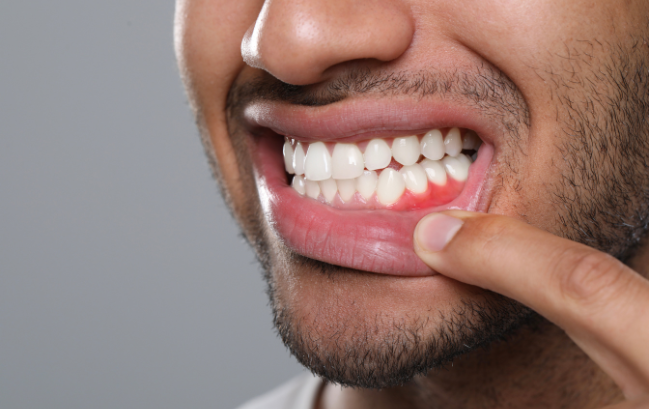
Mouth breathing gums present in a distinctive and recognisable way. The gingival tissues of the upper anterior segment, particularly around the central and lateral incisors and the canines, appear dry, hyperaemic, and chronically inflamed. This pattern is disproportionate to the patient’s overall plaque levels and does not match the tissue health in the posterior segments. Scaling, debridement, and improved oral hygiene compliance bring only temporary improvement before inflammation returns.
The mechanism is desiccation. Mouth breathing gum disease develops because the continuous passage of air over the anterior gingival tissues depletes mucosal moisture and disrupts saliva’s protective functions. Salivary flow carries antimicrobial peptides, immunoglobulins, and buffering agents that maintain local microbial balance. When airflow dries the mucosa for hours each night, these protective mechanisms are consistently undermined, and bacterial colonisation at the anterior gingival margin increases.
Can Mouth Breathing Cause Gum Disease?
Can mouth breathing cause gum disease? The clinical evidence indicates that whilst mouth breathing may not initiate periodontitis on its own, it creates conditions that sustain and worsen existing disease. Reduced salivary protection raises bacterial load, impairs immune defence, disrupts oral pH balance, and interferes with the tissue healing processes that periodontal treatment depends on.
Mouth breathing and gum disease therefore form a self-reinforcing clinical pattern. Until the underlying breathing habit is addressed, the periodontal environment remains compromised regardless of the quality of oral hygiene or professional treatment.

Recognising Mouth Breathing Gums in Practice
Several clinical features should prompt consideration of a mouth breathing component in patients with persistent gum disease:
- Anterior-dominant gingival redness concentrated around the upper incisors and canines
- A distinct demarcation between inflamed anterior tissue and healthier posterior gingiva
- A dry, glazed, or shiny appearance at the labial gingival margin
- Patient-reported dry mouth on waking, morning sore throat, or consistently chapped lips
- Habitual open lip posture noted during the clinical examination
When these features appear alongside gum disease that is not stabilising, a brief history covering sleep quality, snoring, and morning symptoms is clinically warranted.
Sleep Apnoea and Gum Disease: The Systemic Dimension
The relationship between mouth breathing gum disease and sleep-disordered breathing extends beyond surface desiccation. Obstructive sleep apnoea introduces a systemic inflammatory mechanism that compounds periodontal disease at the tissue level.
Can Sleep Apnoea Cause Gum Disease?
Can sleep apnoea cause gum disease? Research into sleep apnoea and gum disease has found elevated circulating pro-inflammatory cytokines, including interleukin-6 and tumour necrosis factor-alpha, in patients with untreated OSA. These same mediators drive periodontal tissue destruction and inhibit the repair processes that follow scaling and root planing. In patients who present with sleep apnoea gum disease concurrently, the systemic inflammatory burden from disordered breathing may be actively preventing the tissue response that periodontal treatment is intended to produce.
Intermittent hypoxia, a hallmark of obstructive sleep apnoea, also impairs vascular function and reduces oxygen and immune cell delivery to peripheral tissues including the periodontium. Sleep apnoea and gum disease therefore interact through two compounding pathways: local desiccation from mouth breathing and systemic vascular and inflammatory impairment from disordered breathing.
Can Gum Disease Cause Breathing Problems?
Can gum disease cause breathing problems? The relationship between these two conditions runs in both directions. Chronic periodontal infection sustains an elevated systemic inflammatory load that can contribute to upper airway mucosal inflammation, potentially increasing airway resistance during sleep. Whilst gum disease is not a primary cause of obstructive sleep apnoea, the two conditions can sustain each other’s inflammatory effects when both remain untreated.
Addressing sleep apnoea gum disease together, rather than in isolation, is therefore more likely to produce durable periodontal and systemic outcomes than treating each condition independently.
What Dentists Can Do
As a dental professional, you are often the first clinician to observe the clinical pattern that signals a sleep or airway component in a periodontal patient. You see these patients regularly, you examine the relevant anatomy, and you are positioned to identify the anterior gingival pattern before any other member of the care team.
When anterior gingival inflammation does not respond as expected, expanding the assessment to include sleep-disordered breathing screening is a well-evidenced clinical step. Validated OSA screening questionnaires, combined with a brief patient history covering snoring, daytime sleepiness, and morning symptoms, can stratify patients for referral or co-management. Craniofacial and intraoral features associated with airway compromise, such as retrognathia, a narrow palate, and tonsillar hypertrophy, provide additional clinical context.
BADSM’s training equips dental professionals to make these assessments systematically. The Essentials of Dental Sleep Medicine course covers airway assessment, sleep-disordered breathing screening, and oral appliance therapy within a multidisciplinary framework. The BADSM resource on breathwork and mouth breathing provides additional reading on the clinical effects of mouth breathing, and the introduction to dental sleep medicine sets out the broader clinical foundation.
Is non-resolving gum disease prompting you to look beyond the periodontium? Explore BADSM’s clinical training courses or join BADSM as a member and develop the skills to identify the sleep and breathing connections that other clinicians miss.
Dr. Aditi Desai is the President and Founder of the British Academy of Dental Sleep Medicine, with over 20 years of experience in oral appliance therapy and a co-author of the Standards of Care for Mandibular Advancement Devices.
Frequently Asked Questions
Can sleep apnoea cause gum disease?
Sleep apnoea and gum disease share an inflammatory pathway. OSA elevates pro-inflammatory cytokines that impair periodontal tissue healing, and intermittent hypoxia reduces oxygen delivery to the gingiva. Patients with untreated sleep apnoea often have gum disease that does not stabilise with standard periodontal treatment alone.
Can mouth breathing cause gum disease?
Reduced salivary flow from mouth breathing impairs antimicrobial protection, disrupts pH balance, and raises bacterial load at the gingival margin. Addressing the underlying breathing pattern is necessary for stable long-term periodontal outcomes.
What do mouth breathing gums look like?
Mouth breathing gums typically present with dry, reddened, and inflamed tissue concentrated around the upper front teeth. The pattern does not match posterior tissue health and persists despite good oral hygiene.
Can gum disease cause breathing problems?
Chronic gum disease contributes to systemic inflammatory load that may worsen upper airway tissue inflammation. The bidirectional relationship between the two conditions means both can sustain each other’s inflammatory effects when left untreated.
How should dentists screen for a sleep component in non-resolving periodontal cases?
When anterior gingival inflammation does not respond as expected, ask about snoring, morning dry mouth, and daytime sleepiness. A validated OSA screening questionnaire combined with a brief airway assessment can identify patients who warrant referral for sleep investigation.

